CO2 Supplementation Unlocks Biomass, Lipid, and Carotenoid Potentials in Microalgae Coelastrella sp. strain Saripa
Abstract
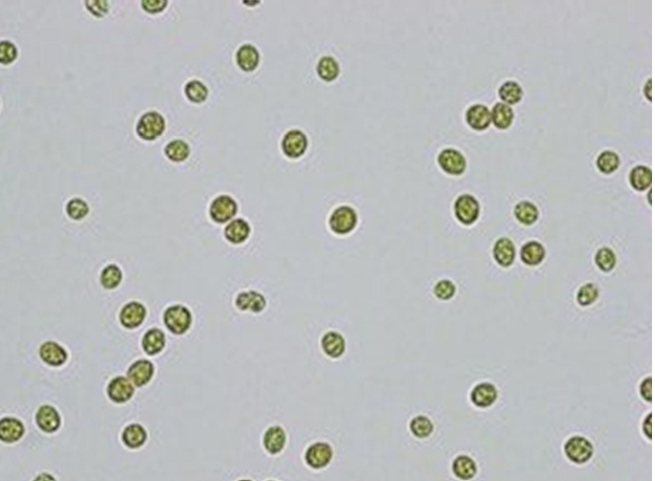
Microalgae are a group of photosynthetic microorganisms widely distributed in various habitats, especially in aquatic environment. This study aimed to evaluate the effects of carbon dioxide (CO2) gas supplementation on the growth and biomass production of the microalgae Coelastrella sp. strain Saripa, as well as the lipid and carotenoid contents produced. Additionally, color changes during the growth process were observed as physiological indicators of the microalgae's response to CO2 treatments and pH changes during growth. The experiment was conducted using a Completely Randomized Design. CO2 was supplemented at 0, 25, and 50 ml volumes. The results showed that different CO2 supplementations influenced the pH change, ranging from 6 to 8.4 during cultivation. The 50 ml CO2 supplementation at pH 6 resulted in the highest biomass production (0.418±0.022 mg/l), lipid production (46%), and total carotenoids (21%). Under this condition, the culture color changed gradually, correlated with the change of chlorophylls and carotenoid contents. Statistical analysis (α = 0.05) confirmed that CO2 supplementations significantly affected biomass, lipid, and carotenoid productions. In conclusion, Coelastrella sp. strain Saripa demonstrated potentials in reducing atmospheric CO2, providing the biomass as lipid and carotenoid bioresources.
Keywords: Coelastrella sp., microalgae, CO2 gas supplementation
Downloads
References
Aditi, Bhardwaj, R., Yadav, A., Swapnil, P., & Meena, M. (2025). Characterization of microalgal β-carotene and astaxanthin: exploring their health-promoting properties under the effect of salinity and light intensity. Biotechnology for Biofuels and Bioproducts, 18, 18. https://doi.org/10.1186/s13068-025-02612-x
Adriyanti, N. L. P. C., Arthana, I. W., & Widiastuti (2021). Respon pertumbuhan dan konsentrasi klorofil-a pada kultur mikroalga Chaetoceros gracilis terhadap perbedaan suhu kultur [Growth response and chlorophyll-a concentration in the microalgae Chaetoceros gracilis culture to differences in culture temperature]. Journal of Marine Research and Technology, 4(1), 37–42.
Agustina, S., Aidha, N. N., Oktarina, E., & Haruminda, J. H. (2019). Optimasi proses ekstraksi karoten dan klorofil dari Spirulina platensis dengan teknologi karbon dioksida (CO2) superkritis menggunakan metode permukaan tanggap [Optimization of the carotene and chlorophyll extraction process from Spirulina platensis with supercritical carbon dioxide (CO2) technology using the responsive surface method]. Jurnal Kimia dan Kemasan, 41(2), 95. http://dx.doi.org/10.24817/jkk.v41i2.5593
Alfisyahrin, A., Anjani, D., Khairani, D., Parsela, J., & Sarjani, T. M. (2025). Analisis perbedaan kandungan pigmen klorofil pada beberapa varietas sayuran (Lactuca sativa dan Amaranthus sp.) [Analysis of differences in chlorophyll pigment content in several vegetable varieties (Lactuca sativa and Amaranthus sp.)]. Journal of Biological Education and Science, 6(1), 61–69. https://doi.org/10.32939/symbiotic.v61.195
Bligh, E. G., & Dyer, W. J. (1959). A rapid method of total lipid extraction and purification. Canadian Journal of Biochemistry and Physiology, 37, 911–917. https://doi.org/10.1139/o59-099
Chu, F., Cheng, J., Zhang, X., Ye, Q., Chen, S., Zhou, J., & Cen, K. (2019). Transcriptome and key gene expression related to carbon metabolism and fatty acid synthesis of Chlorella vulgaris under a nitrogen starvation and phosphorus repletion regime. Journal of Applied Phycology, 31(5), 2881–2893. https://doi.org/10.1007/s10811-019-01811-y
Dharmadewi, A. A. I. (2020). Analisis kandungan klorofil pada beberapa jenis sayuran hijau sebagai alternatif bahan dasar food supplement [Analysis of chlorophyll content in several types of green vegetables as an alternative basic ingredient for food supplements]. Jurnal Emasains: Jurnal Edukasi Matematika dan Sains, 9(2), 171–176. https://doi.org/10.5281/zenodo.4299383
Doney, S. C., Fabry, V. J., Feely, R. A., & Kleypas, J. A. (2009). Ocean acidification: the other CO2 problem. Annual Review of Marine Science, 1, 169–192. https://doi.org/10.1146/annurev.marine.010908.163834
Eka, N. Q. (2021). Pembuatan biodiesel dari mikroalga Coelastrella sp. menggunakan katalis montmorillonite K-10 pada proses esterifikasi [Biodiesel production from microalgae Coelastrella sp. using montmorillonite K-10 catalyst in the esterification process]. [Undergraduate thesis, UIN Syarif Hidayatullah Jakarta].
Hadiyanto, & Maulana, A. (2012). Mikroalga sumber pangan dan energi masa depan [Microalgae as a future source of food and energy]. Retrieved from https://library.gunadarma.ac.id/ecollection/ebook/detail/mikroalga-sumber-pangan-dan-energi-masa-depan
Kandasamy, L. C., Neves, M. A., Demura, M., & Nakajima, M. (2021). The effects of total dissolved carbon dioxide on the growth rate, biochemical composition, and biomass productivity of nonaxenic microalgal polyculture. Sustainability, 13(4), 2267. https://doi.org/10.3390/su13042267
Kusnanda, A. J., Perdana, B. A., Dharma, A., & Chaidir Z. (2021). Isolasi dan skrining mikroalga air tawar sebagai sumber pigmen karotenoid [Isolation and screening of freshwater microalgae as a source of carotenoid pigments]. Jurnal Kimia dan Kemasan, 43(1), 38–43.
Masrun, M., Hasim, H., & Mulis, M. (2022). Pemanfaatan limbah cair tahu dengan dosis berbeda terhadap pertumbuhan Skeletonema costatum [Utilization of tofu liquid waste with different doses on the growth of Skeletonema costatum]. Jurnal Vokasi Sains dan Teknologi, 2(1), 27–31.
Molitor, H. R., Moore, E. J., & Schnoor, J. L. (2019). Maximum CO2 utilization by nutritious microalgae. ACS Sustainable Chemistry and Engineering, 7(10), 9474–9479. https://doi.org/10.1021/ ACSSUSCHEMENG.9B00656
Mulyanto, A. (2010). Mikroalga (Chlorella sp.) sebagai agensia penambat gas karbon dioksida [Microalgae (Chlorella sp.) as a carbon dioxide gas binding agent]. Jurnal Hidrosfir Indonesia, 5(2), 13–23.
Patria, M. P., Amanda, S. P., Susanti, H., Susilaningsih, D., & Taufikurahman, T. (2024). Growth response and color brightness of betta fish (Betta splendens [Regan, 1910]) supplemented by spirulina powder from algae Arthrospira maxima (Setchell and N. L. Gardner 1917). Journal of Agricultural Science and Technology, 26(1), 73–83. https://doi.org/10.22034/JAST.26.1.73
Peng, H., Wei, D., Chen, G., & Chen, F. (2016). Transcriptome analysis reveals global regulation in response to CO2 supplementation in oleaginous microalgae Coccomyxa subellipsoidea C-169. Biotechnology for Biofuels, 9, 151. https://doi.org/10.1186/s13068-016-0571-5
Praharyawan, S. (2021). Peningkatan produksi biomassa sebagai strategi jitu dalam mempercepat produksi biodiesel berbasis mikroalga di Indonesia [Increasing biomass production as an effective strategy to accelerate microalgae-based biodiesel production in Indonesia]. Jurnal Bioteknologi dan Biosains Indonesia, 8(2), 294–320. http://ejurnal.bppt.go.id/index.php/JBBI
Ren, Y., Sun, H., Deng, J., Huang, J., & Chen, F. (2021). Carotenoid production from microalgae: biosynthesis, salinity responses and novel biotechnologies. Marine Drugs, 19(12), 713. https://doi.org/10.3390/md19120713
Römheld, V., & Ceci, A. (2023). Physiological impacts of pH and dissolved inorganic carbon imbalances on microalgal growth and metabolism. Journal of Phycology, 59(4), 789–803. https://doi.org/10.1111/jpy.13245
Satoh, A., Kurano, N. & Miyachi, S. (2001). Inhibition of photosynthesis by intracellular carbonic anhydrase in microalgae under excess concentrations of CO2. Photosynthesis Research, 68, 215–224. https://doi.org/10.1023/A:1012980223847
Sun, J., Chen, Y., & Du, J. (2016). Elevated CO2 improved lipid accumulation by increasing carbon metabolism in Chlorella sorokiniana. Plant Biotechnology Journal, 14(2), 557–566. https://doi.org/10.1111/PBI.12398
Sun, Z., Bo, C., Cao, S., & Sun, L. (2025). Enhancing CO2 fixation in microalgal systems: mechanistic insights and bioreactor strategies. Marine Drugs, 23(3), 113.
https://doi.org/10.3390/md23030113
Susanti, H., Purba, L. D. A., Purwani, J., Retsurika, H., Alifia, L., & Yoshida, M. (2024). Water-soluble humic acid media for sustainable biomass, lipid, and fatty acid production of Coelastrella striolata var. multistriata strain 047. Biomass Conversion and Biorefinery, 15, 24687–24698. https://doi.org/10.1007/s13399-024-05852-3
Turnip, G. (2019). Pengaruh injeksi CO2 terhadap biomassa, total lipid dan profil asam lemak mikroalga Chaetoceros calcitrans [Effect of CO2 injection on biomass, total lipid and fatty acid profile of microalgae Chaetoceros calcitrans]. [Master thesis, Universitas Brawijaya].
Yani, R., Dharma, A., & Yetria, R. (2023). Pengaruh gas CO2 terhadap pertumbuhan, kandungan asam lemak, lipid, dan karotenoid total Chlorella emersonii [The effect of CO2 gas on the growth, fatty acid, lipid and total carotenoid content of Chlorella emersonii]. Jurnal Ilmu Lingkungan, 21(2), 245–250. https://doi.org/10.14710/ jil.21.2.245-250
Downloads
Published
How to Cite
Issue
Section
License
Copyright (c) 2025 Buitenzorg: Journal of Tropical Science

This work is licensed under a Creative Commons Attribution-ShareAlike 4.0 International License.
The article is licensed under a Creative Commons Attribution-ShareAlike 4.0 International License (CC BY-SA), which allows both Authors and Readers to copy and distribute the material in any format or medium, as well as modify and create derivative works from it for any purpose, provided that appropriate credit is given (by citing the article or content), a link to the license is provided, and it is indicated if any changes were made. If the material is modified or used to create derivative works, the contributions must be distributed under the same license as the original.